
- About Us Drodown Toggler
- Consult the Doctor Drodown Toggler
- Testimonials Drodown Toggler
- Patient Education Drodown Toggler
- Self Assessment Drodown Toggler

Rheumatoid Arthritis
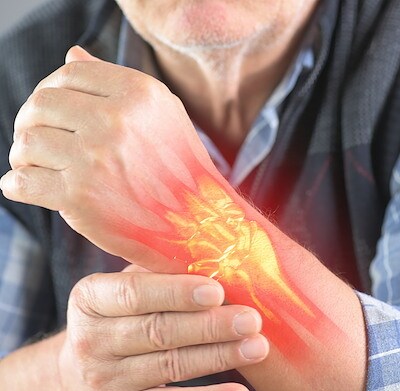
An inflammatory, autoimmune disease that usually strikes between 25-50 years of age. May develop within weeks or months. Most of the time it affects symmetrically on both sides of the body. Some of its symptoms are causing Pain, Redness, & Swelling of affected joints. This process may migrate from one joint to another. Affects many joints, usually small joints of the hand and feet may include elbow, shoulder, ankles & knees. The disease can affect the entire system leading to prolonged stiffness, especially in the morning causing major fatigue.
Rheumatoid Arthritis

What Is Rheumatoid Arthritis (RA)?
- It is an inflammatory, autoimmune disease.
- Usually strikes between the ages of 25-50 years
- It can occur in children.
- Women have it three times more than men.
- It has a hereditary tendency but may skip generations.
- The onset varies but it may develop within weeks or months.
- Usually affects joints symmetrically on both sides of the body.
- The disease may cause major fatigue.
- Causes Pain, Redness, Warmth, Swelling and Loss of function of affected joints.
- This process may migrate from one joint
to another. - Affects many joints, usually small joints of the hand & feet, elbow, shoulder, ankles & knees.
- The disease can affect the entire system, with feeling of sickness, weight loss and fever.
- It causes prolonged stiffness, mainly in
the morning and after rest.
How Is It Diagnosed?
- The diagnosis is essentially clinical.
- Rheumatoid factor and APCA tests is no indicator of the presence of the disease and is mainly used for its prognostic value.
- X-rays, laboratory tests, etc. are done to monitor the progress of the disease and effects
of treatment.

What Are The Foods Restrictions?
- There is no clear evidence for any food restrictions. Food like rice, wheat, lentils, fruits, curd, buttermilk, red meat, have been linked but with no evidence.
- Weight loss is advised.
- Acidity, Flatulence & upset stomach are not related to the disease.

What Are The Effects Of Weather?
- There are no long-term effects of weather. Many people feel worse in cold and humid weather, and comfortable in dry and crisp conditions.
- Winters or cold cause pain & stiffness of affected joints.

What Happens In Rheumatoid Arthritis?
- For reasons not fully understood the bodies immune system attacks the tissue surrounding
the joint. - Due to this attack the joint lining or ‘synovium' becomes inflamed and produces large quantities of synovial fluid.
- This leads to swollen, sore and stiff joints.
- If left untreated, this process damages the joint cartilage and erodes the bones, leading to joint destruction and deformity.

Does It Run In Families?
- Since we have good cure for the disease, do not be afraid that you may pass it on to your children.
- Genetic predisposition has been seen but the disease often skips every other generation.

Should Pregnancy Be Avoided?
- Those women taking DMARDs, and are planning pregnancy, must consult their Doctor.
- In 75% of mothers, RA improves during Pregnancy.
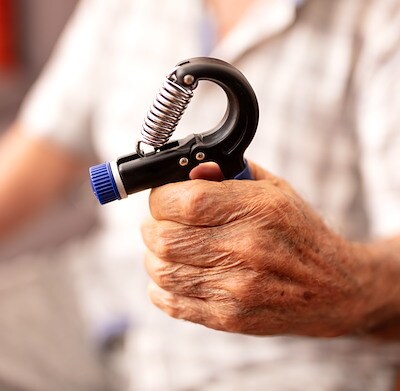
Role of Exercise in Rheumatoid Arthritis
Exercise plays a very important role in the management of Rheumatoid Arthritis (RA).
Advantages of Exercise
- Helps relieve pain
- Improves blood supply to the joints
- Increases bone mineralization and strength
- Enhances joint function and reduces stiffness
Rules of Exercise
- Rest is advised when joints are hot and inflamed
- Exercise should be carried out under proper medical advice and guidance
What Is The Different Causes Of Arthritis?
The Greek word ‘Arthro' means joint while ‘itis' means swollen. Arthritis may be found in common viral fever, malaria or Typhoid etc. Other common causes are Rheumatoid Arthritis, Gout, Ankylosing Spondylitis, Systemic Lupus Erythematosis (SLE), Psoriasis, etc. Children may get Juvenile Rheumatoid Arthritis (JRA) and Juvenile Idiopathic Arthritis (JIA). The commonest type of arthritis is Osteoarthritis.

What Is The Treatment Fo Rheumatoid Arthritis?
- Early Diagnosis: Only an early and accurate diagnosis will prevent joint damage.
- Aggressive Approach: Early and aggressive treatment is aimed at achieving good disease control.
- Joint Protection: Joints must be protected against damage, especially when inflamed.
- Pain Relief: Includes physiotherapy, painkillers, and anti-inflammatory medications.
- Disease modification : DMARDs-Disease Modifying Anti-Rheumatoid Drugs are essential for treatment
- Regular follow-up : to monitor and modify the results and adverse effects of the treatment
- Damage repair : repair of damaged joints by various methods
- Counter Disability : help overcome the disabilities caused by the joint damage
- Family Counselling : family should be educated about the needs of the patient
- Patient support : Physically & Psychosocially help the patient to cope with the disease
Medication in Rheumatoid Arthritis

1. Painkillers & Anti-inflammatory Drugs
- Provide pain relief and help reduce inflammation
- Improve overall quality of life
- Should not be used indiscriminately; over-the-counter use should be avoided
- May have serious side effects such as gastrointestinal ulcers and kidney damage

2. Steroids
- Potent anti-inflammatory agents that also relieve pain
- Provide excellent symptomatic relief but do not stop disease progression
- Associated with significant side effects including gastrointestinal issues and bone degeneration
- Known as the “double-edged sword” of rheumatology; should be used only under medical supervision
- May cause rebound symptoms if stopped abruptly; should be tapered gradually
- Local (injection) use reduces systemic side effects

3. Conventional DMARDs (Disease-Modifying Anti-Rheumatic Drugs)
- Essential for the treatment of Rheumatoid Arthritis
- Should not be discontinued without medical advice due to persistent subclinical disease activity
- May have potential toxicity, which can be managed with proper monitoring and follow-up
- Cannot be removed by dialysis; specific washout procedures are required
- Take time to show therapeutic effects
- Contraindicated in pregnancy and breastfeeding

4. Biologic DMARDs (Biologic Disease-Modifying Anti-Rheumatic Drugs)
- Newer class of drugs with improved outcomes
- Used in highly active disease with poor prognostic factors or when conventional DMARDs are ineffective
- Target specific components of the inflammatory pathway (e.g., TNF-alpha, T cells, B cells, IL-6)
- May increase risk of infections due to immune suppression
- With proper screening and monitoring, risks are minimized and manageable

5. Food Supplements
- Includes calcium, vitamins, joint-support supplements, antioxidants, and related agents
- Help support treatment and prevent disease-related damage

6. Importance and Cost of Treatment
Treatment is essential, as Rheumatoid Arthritis is a progressive degenerative disease that can lead to:
- Deformity: Disfigured and destructed joints
- Disability: Inability to perform daily activities and work
- Discomfort: Chronic pain and reduced quality of life
- Reduced Lifespan: May shorten life expectancy by 10–15 years if untreated